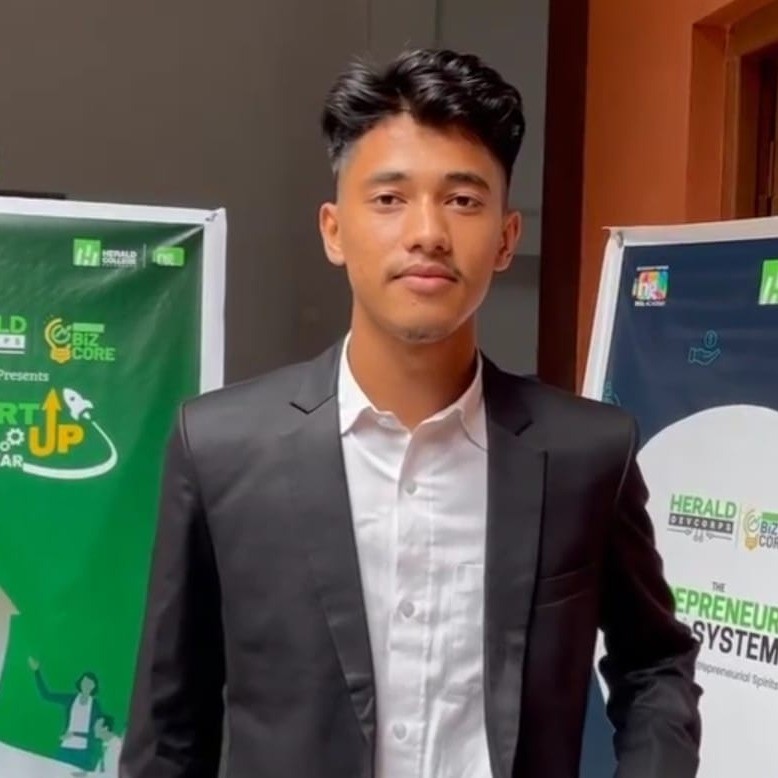
I'm Rohit, a Computer Science student who enjoys thinking about how intelligence actually works—in machines, in markets, and occasionally in humans. I build AI systems not just to make them perform well, but to understand why they behave the way they do (and why they sometimes behave badly).
My work lives at the crossroads of AI, mathematics, and finance. I've built machine learning and deep learning projects using Python, PyTorch, and scikit-learn, explored trading strategies through backtesting, and worked on research projects like a multi-LLM framework for creative mathematics problem generation. I like turning abstract ideas into code—and then stress-testing my own assumptions until something breaks, preferably in simulation.
I enjoy both theory and practice. Mathematics feels like the cleanest language we have for describing reality, while AI feels like a slightly opinionated assistant that learns from examples and occasionally overfits to life. I care about clarity, rigor, and building models that behave sensibly outside ideal conditions—because the real world rarely reads the documentation.
At the moment, my research focus is on exploring how macroeconomic shocks and financial signals can be modeled using a combination of econometric methods (e.g., VAR frameworks) and machine learning approaches (e.g., LLM-based information extraction and agent-based simulations). I'm drawn to problems that are a bit messy, a bit uncomfortable, and usually more interesting than they first appear.
Experience
Research Intern @ Nepal Rastra Bank
Mar 2026 – May 2026
Developed a Bayesian Vector Autoregression (BVAR) model to analyze the impact of remittance shocks on banking-sector stability within a macroprudential stress-testing framework. Conducted scenario design and Impulse Response Function (IRF) analysis to identify systemic risk drivers and delayed transmission mechanisms.
AI Fellow @ Fusemachines
Apr 2025 – Oct 2025
Selected from thousands for a prestigious AI fellowship focused on industry-grade AI systems.
Engaged in a rigorous curriculum covering machine learning, deep learning, GenAI and
real-world capstone projects under expert mentorship.
Data Fellow @ Sunway Student Research Council
Feb 2024 – Feb 2025
Selected from 650+ applicants for a competitive data science fellowship. Gained hands-on
experience with statistical analysis, A/B testing, data visualization, and real-world student
engagement projects.
Tutoring & Mentoring
Extensive experience tutoring SAT Math and high school subjects including mathematics, physics, and computer science. Passionate about making complex concepts accessible to students of all backgrounds.
Skills
Programming
Python, SQL, MATLAB
Quantitative Methods
Time-series modeling, Bayesian methods, Monte Carlo simulation
Built an empathetic mental health chatbot leveraging Retrieval-Augmented Generation (RAG) architecture with open-source LLMs from Hugging Face.
The system uses LangChain for orchestrating prompts, memory, and retrieval modules, while Pinecone vector database handles efficient storage and
querying of vector embeddings. This architecture ensures contextually relevant and empathetic responses while maintaining accuracy in mental health information.
🎥 Live Demo
Watch the chatbot in action as it provides empathetic responses and mental health support using advanced RAG architecture.
Built a broker network model using graph theory to identify influential market participants and detect anomalous trading behavior. Developed a portfolio optimization engine using Monte Carlo simulation and the Markowitz Model to estimate efficient frontiers and risk-adjusted returns. Designed a sentiment analysis pipeline to extract signals from financial news and integrate them into market models.
Developed a system where natural language trading strategies are converted into executable backtesting code using large language models. Built a secure sandboxed environment to evaluate generated strategies and ensure reproducibility, alongside performance analytics tools for evaluating trading strategies using risk-adjusted metrics.
🎥 Live Demo
Watch Tradeनीति in action as it guides Nepali retail traders through backtesting and risk analysis.
LLMsBacktestingSandboxed EnvironmentRisk Analysis
Multi-LLM Framework for Creative Mathematics Problem Generation
Research project evaluating multiple LLMs for problem generation, published in the Ohio Journal of School Mathematics. Developed novel metrics for assessing mathematical creativity in AI-generated content.
Hybrid Foundation Model and Price Action Framework for Financial Forecasting with Uncertainty (Ongoing)
Designing a hybrid AI system that integrates Time Series Foundation Model (TimeGPT)
with Price Action features (candlestick structures, support/resistance, volatility regimes)
to enhance interpretability and robustness of financial forecasts.
Developing probabilistic forecasting pipeline with uncertainty quantification (conformal
prediction, quantile regression) and trader-centric evaluation metrics (Sharpe ratio, Sortino
ratio, Max Drawdown).
Honors & Extracurriculars
American Math Olympiad - Silver Medal, Country Rank 3
IOE Integration Bee - Finalist
Nepal Youth Science Summit - Bronze Medal
MILSET Expo - Asteriod Hunting Project
Breakthrough Junior Challenge - Diffraction video project
Publications
LLM Ensemble: Multi-LLM framework for Creative Mathematics Problem Generation
Ohio Journal of School Mathematics (Under Review, 2025)
Conducted under the guidance of Prof. Michael Todd Edwards, this project proposes a
multi-LLM system to generate curriculum-aligned, cognitively rich math problems. Research
funded by the journal to support LLM experimentation and development.
An exploration of how algorithmic thinking and structured approaches can guide us through life's decisions and uncertainties. Reflections on the intersection of computer science, philosophy, and human experience.
Understanding How GPT as a Decoder-Only Model Answers: What is the Capital City of Nepal?
Published on Medium
A deep dive into how decoder-only models like GPT process and answer questions. Using the simple question "What is the capital city of Nepal?" as a case study to understand the mechanisms behind language model reasoning and generation.
Latest updates on my research, publications, and community involvement will appear here. Check back regularly for announcements about new projects and achievements.